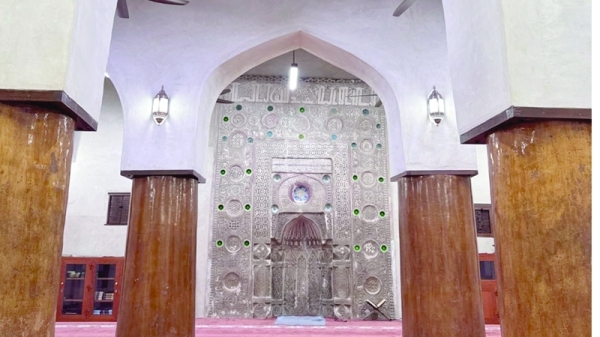
Historic mosque with its unique 16th-century mihrab restored
ملخص مفصل
MUSCAT, NOV 14 The Ministry of Heritage and Tourism has completed restoration and maintenance work on the historic Al Shawadhinah mosque in Al Aqr in...
The Ministry of Heritage and Tourism has completed restoration and maintenance work on the historic Al Shawadhinah mosque in Al Aqr in Nizwa.
The project is part of the ministry’s efforts to preserve Oman’s architectural heritage and safeguard its cultural legacy, helping maintain the site's authenticity, historical significance, and architectural value while ensuring its sustainability for future generations.
Founded in the 7th century — the 9th year of Hijra, according to some regional accounts — the mosque is one of the earliest places of Islamic worship in the country. It is also commonly known as Masjid Al Qiblatayn (mosque of the two qiblas).
Built on an elevated mudbrick and stone terrace above street level, the structure features a northern prayer hall supported by four columns across three aisles. It includes an open-air courtyard (sahn) and an ablution room, and it traditionally lacks a minaret and a typical dome.
To gain insight into the architectural perspective, the Observer spoke to Ali bin Jaffer al Lawati, an architect and PhD researcher.
"The importance of Al Shawadhinah Mosque extends beyond its religious and historical value; it also represents an important landmark of Omani vernacular architecture," he said. "In the early days of Islam, mosques were characterised by their simplicity, essentially consisting of an enclosed space or hall dedicated to prayer, without elevated minarets for the call to prayer or domes."
He explained that these architectural features were gradually introduced during the Umayyad and Abbasid periods, and later in the Ottoman era.
"However, Omani mosques retained their simple and distinctive architectural character despite changes that happened in other parts of the Islamic world, incorporating only a few local elements," Al Lawati noted. "Among the most notable is the very small dome positioned at the mosque's corner, which the Italian architect and archaeologist Paolo Maria Costa referred to as the Al Boumah.
Furthermore, the…
مطلع المقال، مقتطف من Oman Observer. لقراءة المقال كاملًا، افتحه على موقع الناشر.
يعرض MarketNews العنوان والملخص كما نشرتهما الوسيلة الإعلامية. المقال الكامل متوفر على موقع الناشر. (www.omanobserver.om)