Sea Star
Résumé détaillé
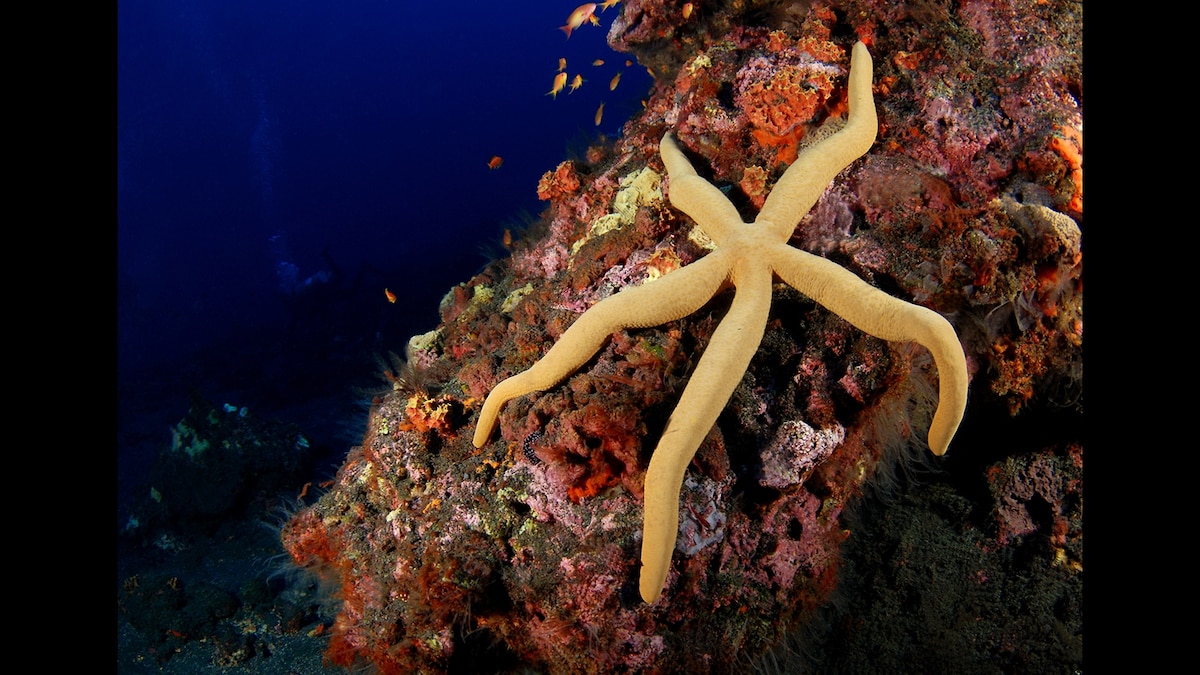
You probably know sea stars as starfish, the name sea stars are commonly known by. But sea stars aren’t really fish. Sea stars, like sea urchins and sand dollars, do not have backbones, which makes them part of a group called invertebrates. Fish have backbones, which makes them vertebrates. Got it? Most sea stars sport spiny skin and five arms, although some can grow as many as 50 arms.
Most sea stars sport spiny skin and five arms, although some can grow as many as 50 arms. The arms are covered with pincerlike organs and suckers that allow the animal to slowly creep along the ocean floor.
Light-sensitive eyespots on the tips of the arms help the sea star find food.
Favorites on the menu include mollusks such as clams, oysters, and snails. The sea star eats by attaching to prey and extending its stomach out through its mouth. Enzymes from the sea star’s stomach digest the prey. The digested material enters the sea star’s stomach. Tiny organisms can be swallowed whole. Sea stars occupy every type of habitat, including tidal pools, rocky shores, sea grass, kelp beds, and coral reefs. Some sea stars even live in sands as deep as 20,530 feet (9,000 meters).
Sea stars aren’t social creatures, but they will congregate in large groups during certain times of the year to feed.
Début de l'article, extrait de National Geographic. Pour lire la suite, ouvrez l'article chez le média.
MarketNews présente le titre et le résumé publiés par le média. L'article complet se lit sur le site de l'éditeur. (kids.nationalgeographic.com)