Can a Moment in the Spotlight Help Unravel the Bayeux Tapestry’s Oldest Mysteries?
ملخص مفصل
Of all the wonders and mysteries that surround the 225-foot-long medieval artwork known as the Bayeux Tapestry, perhaps the greatest of all is its survival. There are so many ways…
For centuries, scholars have puzzled over the hidden meanings within medieval Europe’s most enigmatic surviving artwork. Now a blockbuster exhibition in London is sparking fresh debate over the secrets in the stitches.
Of all the wonders and mysteries that surround the 225-foot-long medieval artwork known as the Bayeux Tapestry, perhaps the greatest of all is its survival. There are so many ways for any fragile piece of fabric not to endure, whether by processes of nature (rot, heat, mold, pests, humidity, sunlight), by accident, or by the careless and destructive acts of humans. As the centuries pass, few such objects evade at least one of these fates. But the Bayeux Tapestry—not only a relic from a past almost inconceivably different from our own but also an incomparable window into that past—has done so for nearly a thousand years.
It hasn’t come through unscathed. Its edges are scattered with pinholes where it was formerly exhibited using nails. It has been splattered by wax, likely while displayed in a cathedral in the northern French city of Bayeux. It is creased and frayed, in part from the winding and unwinding of a spool on which it was kept in the 19th century. In 1792, during the fervor of the French Revolution, it was once apparently taken as convenient material with which to cover a wagon, only to be saved by a citizen who valued its significance. The centuries of manhandling and entropy have taken a toll.
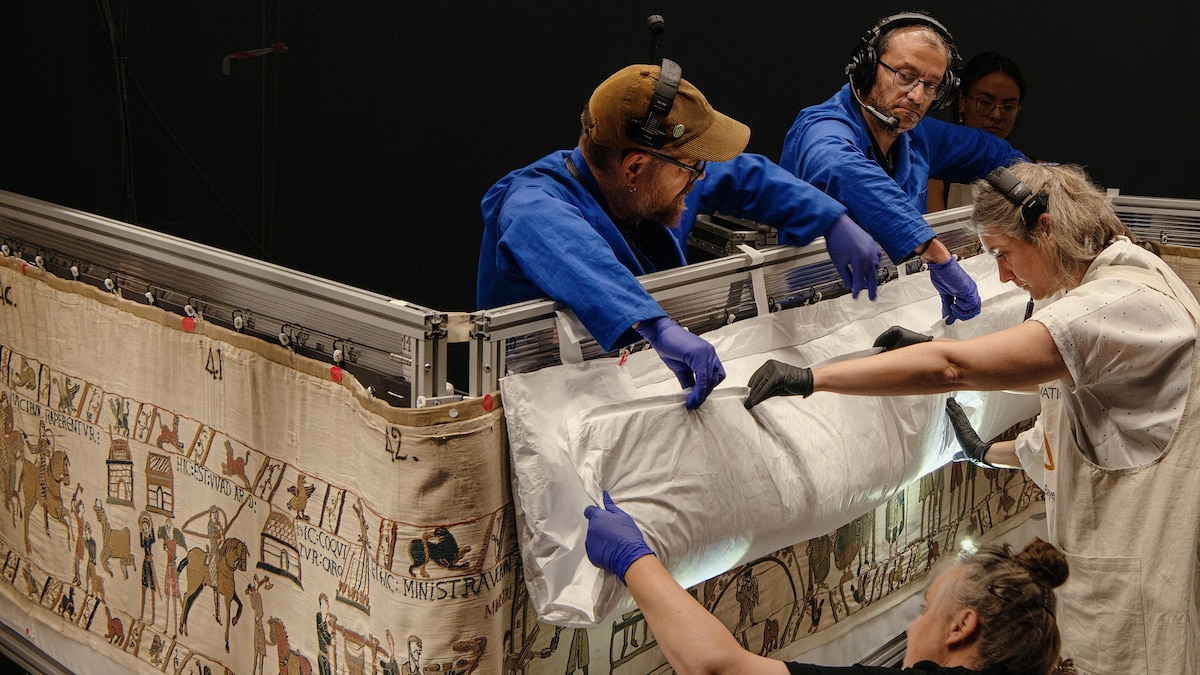
The Bayeux Tapestry, which is currently the subject of a headline-making exhibition at the British Museum, is not technically a tapestry at all but an embroidery: dyed wools stitched on bleached linen base cloth. Its embroidered scenes tell the story of the Norman Conquest of England, the 1066 invasion by William the Conqueror and an army from what’s now northern France, which ended Anglo-Saxon rule and reshaped England’s politics, culture, and language.
The enduring fascination that surrounds it partly relates to how little about the tapestry we can say…
مطلع المقال، مقتطف من National Geographic. لقراءة المقال كاملًا، افتحه على موقع الناشر.
يعرض MarketNews العنوان والملخص كما نشرتهما الوسيلة الإعلامية. المقال الكامل متوفر على موقع الناشر. (www.nationalgeographic.com)