This surprise cost could derail your heat pump or EV charger installation. Here’s how to avoid it.
Résumé détaillé
If all goes to plan, I will spend a grand total of zero dollars on an electrification project that could have cost me well over $10,000.
“Electrify everything” has become a mantra in the fight against climate change. Switching a home’s heating, cooling, and other energy-intensive loads from fossil fuels to electricity could drastically reduce planet-warming emissions. But electrification has often run into a major, and expensive, hurdle: upgrading a home’s electric capacity.
A home’s connection to the grid is rated by amperage, or amps, which caps the amount of current it can safely draw at once. The standard for houses built in the last few decades is generally 200 amps. Many older residences, however, have a lower limit because they were constructed when electricity powered little more than the lights, refrigerator, microwave, and perhaps the dryer. Research from Lawrence Berkeley National Laboratory found that roughly a third of homes in the United States have panel capacity of 100 amps or less. In the Northeast, that share rises to closer to half.
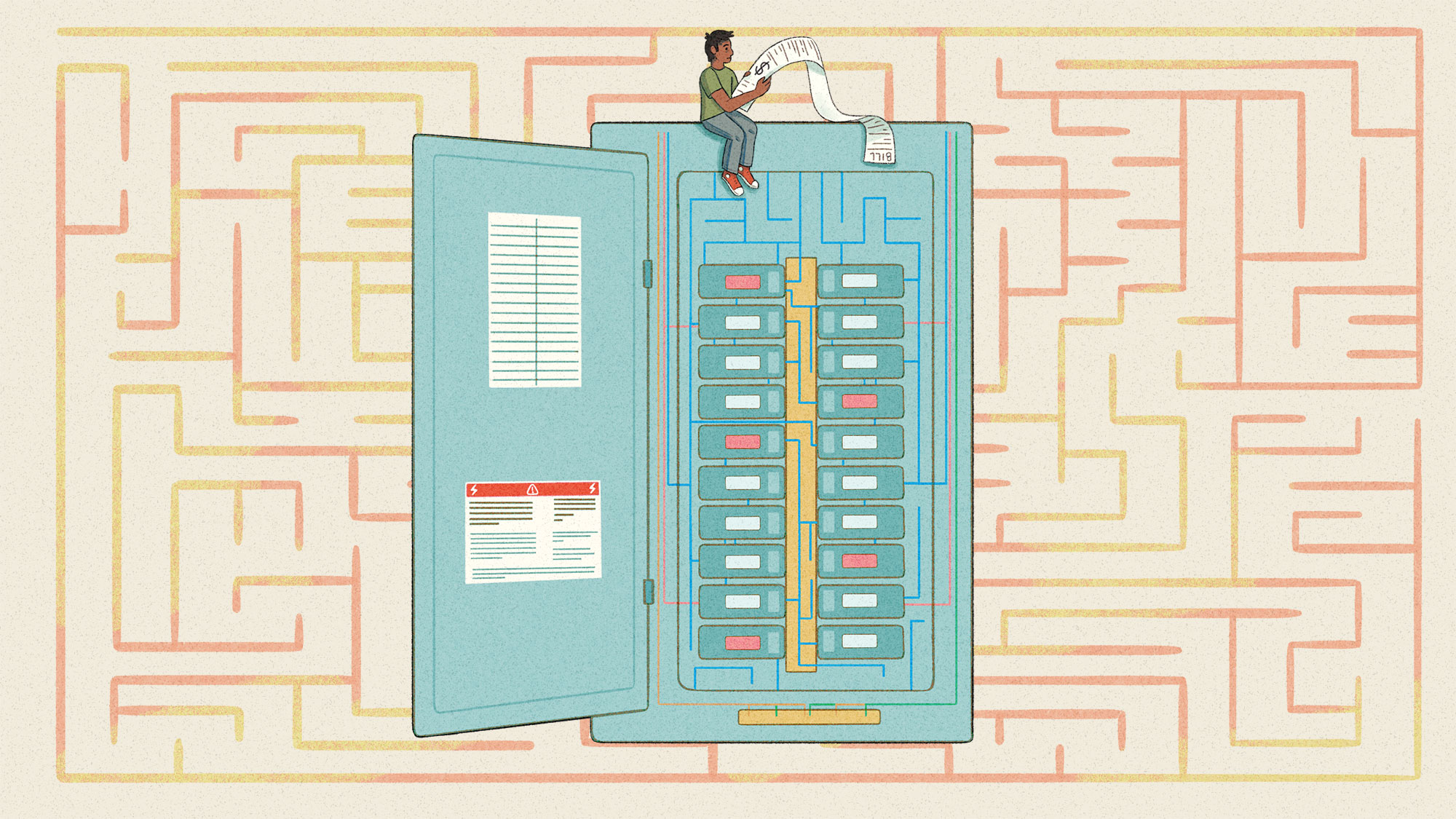
As people install heat pumps, induction stoves, and EV chargers, they can run into a couple of potential issues. Their electric panel may simply run out of slots to install more circuit breakers, in which case the relatively easy fix of adding a subpanel often does the trick. But sometimes homeowners run into a bigger problem, where an electrician says all the new loads will push them past their home’s peak power limits.
Upgrading an electrical service can start at a few thousand dollars and quickly skyrocket, particularly in rural areas or places where power lines run underground. “We’ve seen estimates of $10,000 to $20,000,” said AJ Rossman, an electrical engineer with VEIC, a contractor that runs much of Efficiency Vermont’s state program.
To support our nonprofit environmental journalism, please consider disabling your ad-blocker to allow ads on Grist. Here's How
The exact scope of the problem is unclear. There is scant data on how many service upgrades are done each year, let alone those that may have been recommended and never made due to the cost.
The…
Début de l'article, extrait de Grist. Pour lire la suite, ouvrez l'article chez le média.
MarketNews présente le titre et le résumé publiés par le média. L'article complet se lit sur le site de l'éditeur. (grist.org)