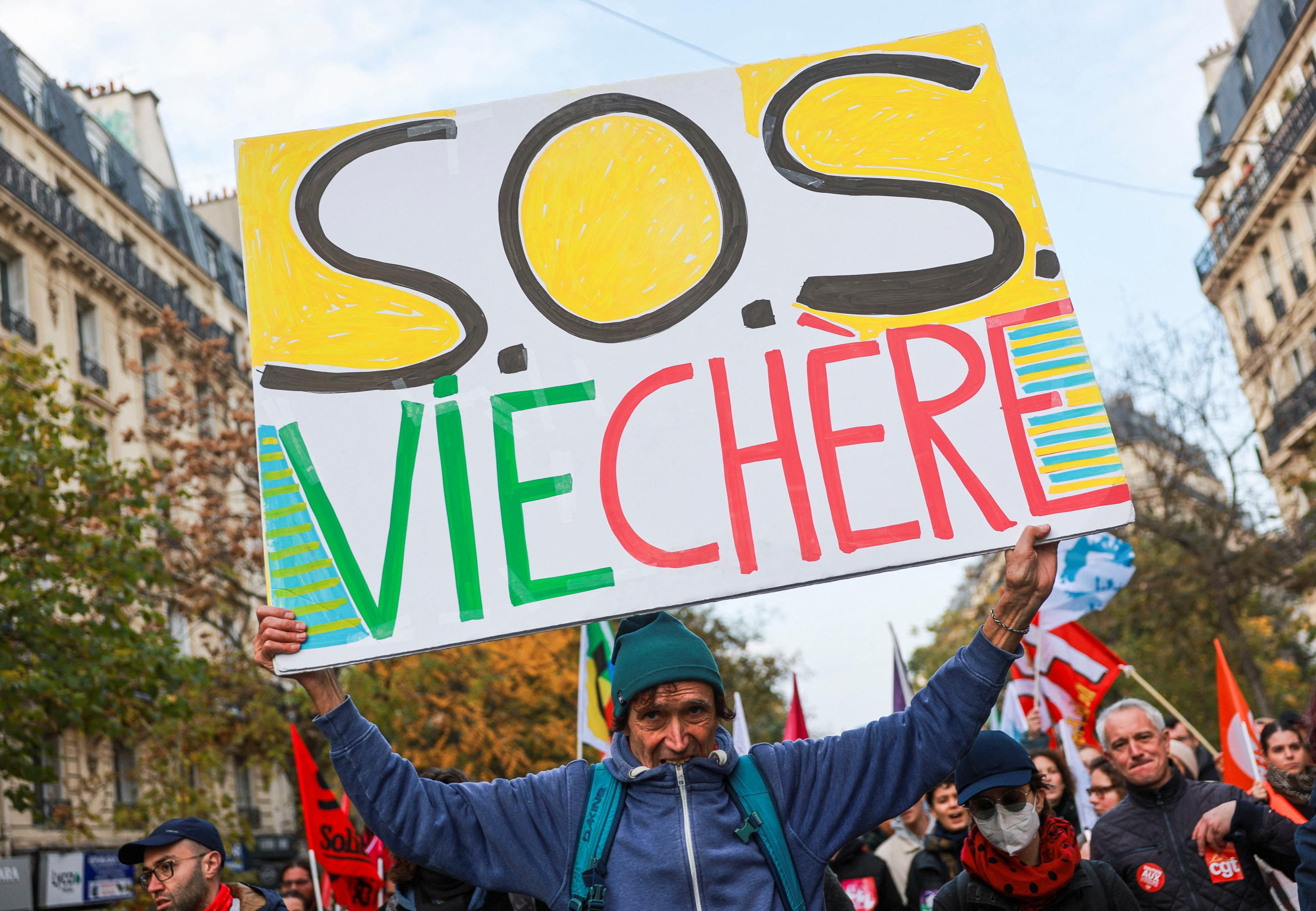
Amid protests, France's rising debt costs threaten stability
ملخص مفصل
France plans to spend an extra €4 billion on education amid nationwide protests. But with public debt mounting and interest costs climbing, how much fiscal room does the government have?
Deeply indebted, politically trapped in a standoff between extremes and led by a government without a parliamentary majority: These are the defining features of France's current predicament.
If, in response to nationwide protests, the government plans to provide €4 billion ($4.48 billion) in low-interest loans to renovate schools by 2030 and allocate a further €1 billion to universities by 2029, it is promising money the state simply does not have.
France's public debt stands at around 120% of gross domestic product (GDP). By comparison, Germany's debt-to-GDP ratio is roughly 65%, despite its €600 billion investment package for infrastructure and defense.
Germany still enjoys the highest possible AAA credit rating. France, by contrast, is rated AA, A+ or Aa3, depending on the credit agency. While Germany's outlook is consistently rated as stable, several agencies have assigned France a negative outlook.
As a result, the French government must pay higher interest rates on its borrowing than Berlin. The risk premium over German government bonds, known as the spread, is now at its highest level since the financial crisis. France pays nearly 1.6 percentage points more in interest than Germany on 10-year bonds.
The spread acts as a kind of "fever gauge" for bond markets, explained Friedrich Heinemann, an economist at the Leibniz Center for European Economic Research (ZEW) in Mannheim.
"This fever gauge then forces a change of course. If the spread rises too sharply, France's financing conditions come under pressure, and anyone in France who needs a loan has to pay higher interest rates. Banks then get into trouble, and the crisis escalates further," Heinemann told DW.
"This could then slide toward a financial crisis, which would finally send a clear signal to everyone: Things cannot continue like this unless you are prepared to risk a genuine economic collapse," he said.
Landry Charrier, a researcher at the University of Bonn's Center for Advanced Security, Strategic and…
مطلع المقال، مقتطف من DW Business. لقراءة المقال كاملًا، افتحه على موقع الناشر.
يعرض MarketNews العنوان والملخص كما نشرتهما الوسيلة الإعلامية. المقال الكامل متوفر على موقع الناشر. (www.dw.com)