Concrete and steel – or mangroves and forests? When it comes to climate adaptation, nature is much cheaper
Résumé détaillé
Nature can protect coastlines, watersheds and waterways for a fraction of the cost of traditional infrastructure. Why isn’t it mainstream?
What’s the best way to protect ourselves against climate change? The default is to reach for concrete and steel to build seawalls, dykes, dams and drainage systems. These can work. But they are expensive and inflexible.
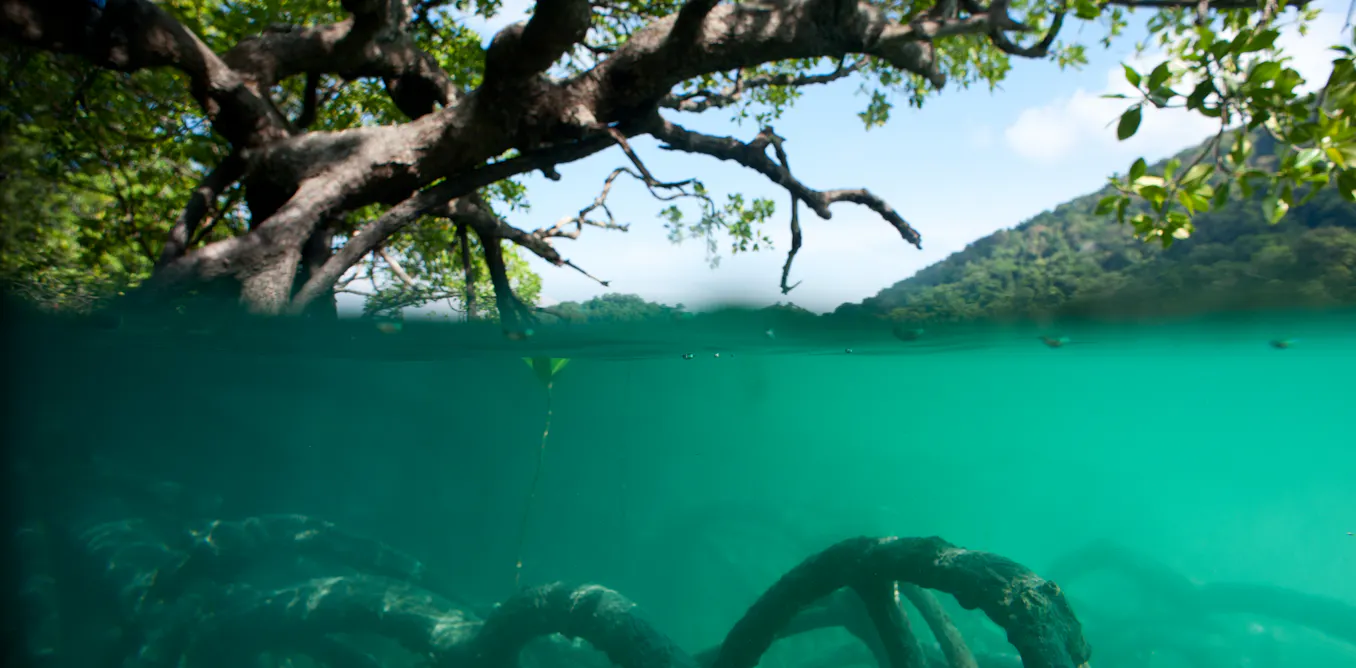
There’s another, much cheaper option which gets vastly less attention. Mangroves, forests and urban trees can help protect humans and their homes, farms and cities from floods, droughts, rising seas and heat.
As our recent research shows, these methods aren’t fig leaves – they’re high-performance critical infrastructure.
Unlike grey infrastructure of steel and concrete, these living systems can adapt as the climate shifts. Mangrove forests can shift as the sea rises, for example.
Green infrastructure has proven itself cost-effective and functional in nations from Brazil to Kenya to Indonesia. But adoption could be much broader – if authorities properly considered nature as an infrastructure option.
Many engineered assets were designed for a stable climate that no longer exists.
Coastal defences designed to repel mid-20th century level storm surges are being breached with growing regularity.
As rainfall patterns shift, a rise in extreme rainfall can overwhelm drainage systems built for the last century. In 2022, severe summer downpours caused the failure of water infrastructure in Jackson, Mississippi. This year, intense cloudbursts turned streets into raging rivers in Saitama, Japan.
Once built, concrete and steel do their job until they fail. But living systems can respond by adjusting to new patterns of temperature, rainfall and sediment deposition rather than simply failing.
Début de l'article, extrait de The Conversation AU. Pour lire la suite, ouvrez l'article chez le média.
MarketNews présente le titre et le résumé publiés par le média. L'article complet se lit sur le site de l'éditeur. (theconversation.com)