Congo Ebola outbreak defies control as conflict, hunger fuel crisis six months in
ملخص مفصل
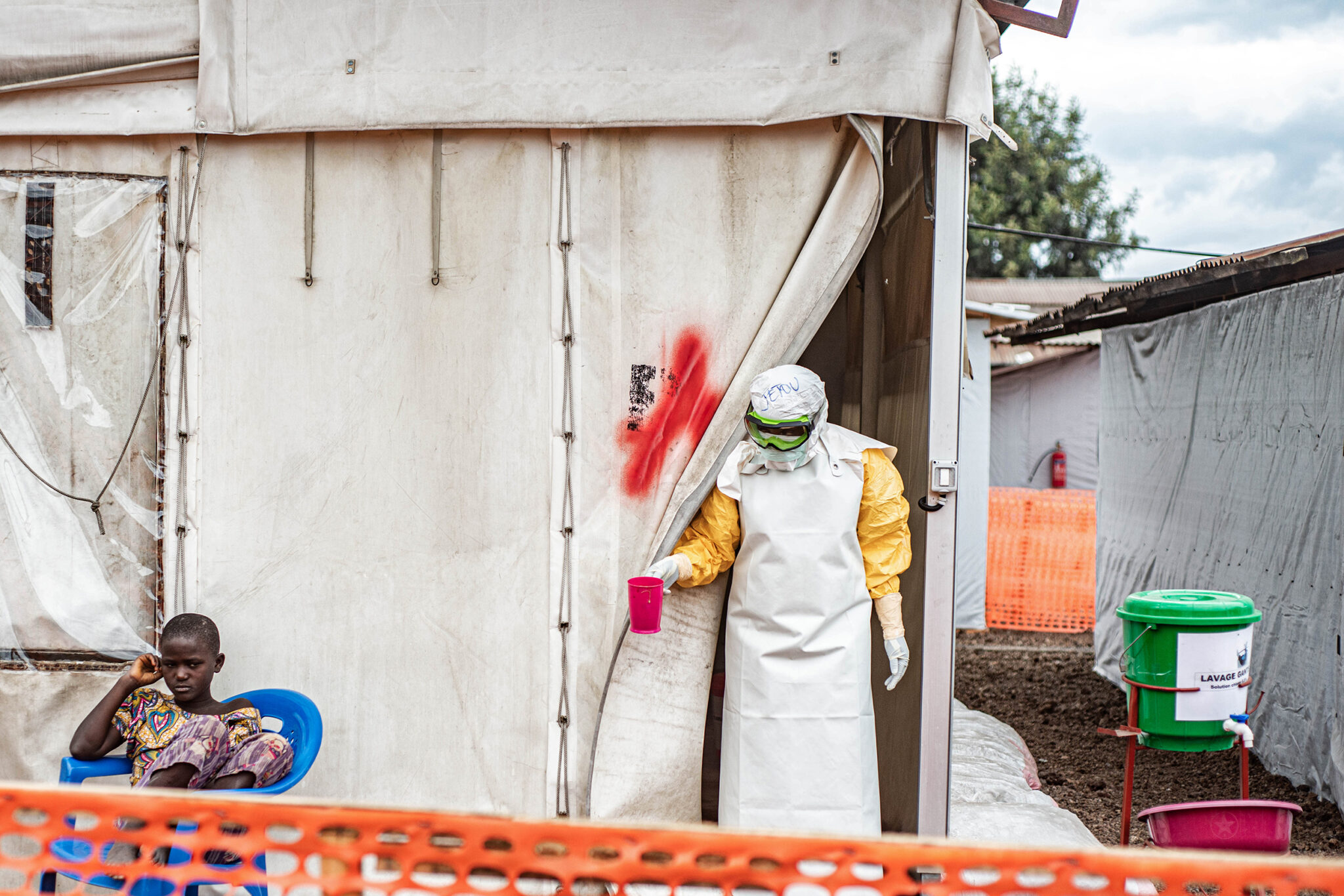
About two-thirds of Ebola deaths have recently occurred in communities rather than treatment centres, according to Médecins Sans Frontières.
Six months into the biggest Ebola outbreak in the Democratic Republic of Congo’s history, containing the virus increasingly depends on solving problems far beyond Ebola — hunger, armed conflict, mistrust and a health system already buckling under the strain.
More than 11 000 people have been infected and 5 500 have died since the outbreak was declared May 15. For months, Ebola has been killing roughly 240 people a week, the equivalent of about one and a half Boeing Co. 737 passenger jets crashing every week.
“It’s a systems problem compounded by basically geography, insecurity, conflict, poor roads, mistrust,” said William Clemmer, a physician who has worked in Congo for three decades and is senior regional health adviser for Corus International based in Goma.
Clemmer, 69, who has worked on four Ebola outbreaks, said many health facilities entered the current crisis without reliable water, electricity, sterilisation, waste disposal or supply systems. Delivering protective equipment can only accomplish so much if clinics lack the basic infrastructure needed to use it safely, he said.
Congo’s own data illustrate the problem. As of November 14, the country had recorded 11 376 confirmed infections and 5 568 deaths, for a fatality rate of almost 49%. The outbreak had reached 68 health zones across eight provinces.
In North Kivu province, 153 Ebola patients and suspected cases were being cared for in ordinary health facilities outside designated treatment and isolation centres on November 14. People who aren’t identified and isolated can continue spreading Ebola at home, in clinics and during funerals.
About two-thirds of Ebola deaths have recently occurred in communities rather than treatment centres, according to Médecins Sans Frontières.
“When two-thirds of our deaths occur in local communities, that basically tells us that either people are being detected too late or they’re not reaching care at all,” Clemmer said.
The International Rescue Committee said its teams recently…
مطلع المقال، مقتطف من Moneyweb. لقراءة المقال كاملًا، افتحه على موقع الناشر.
يعرض MarketNews العنوان والملخص كما نشرتهما الوسيلة الإعلامية. المقال الكامل متوفر على موقع الناشر. (www.moneyweb.co.za)