KRX sees high volatility in first week of extended trading
ملخص مفصل
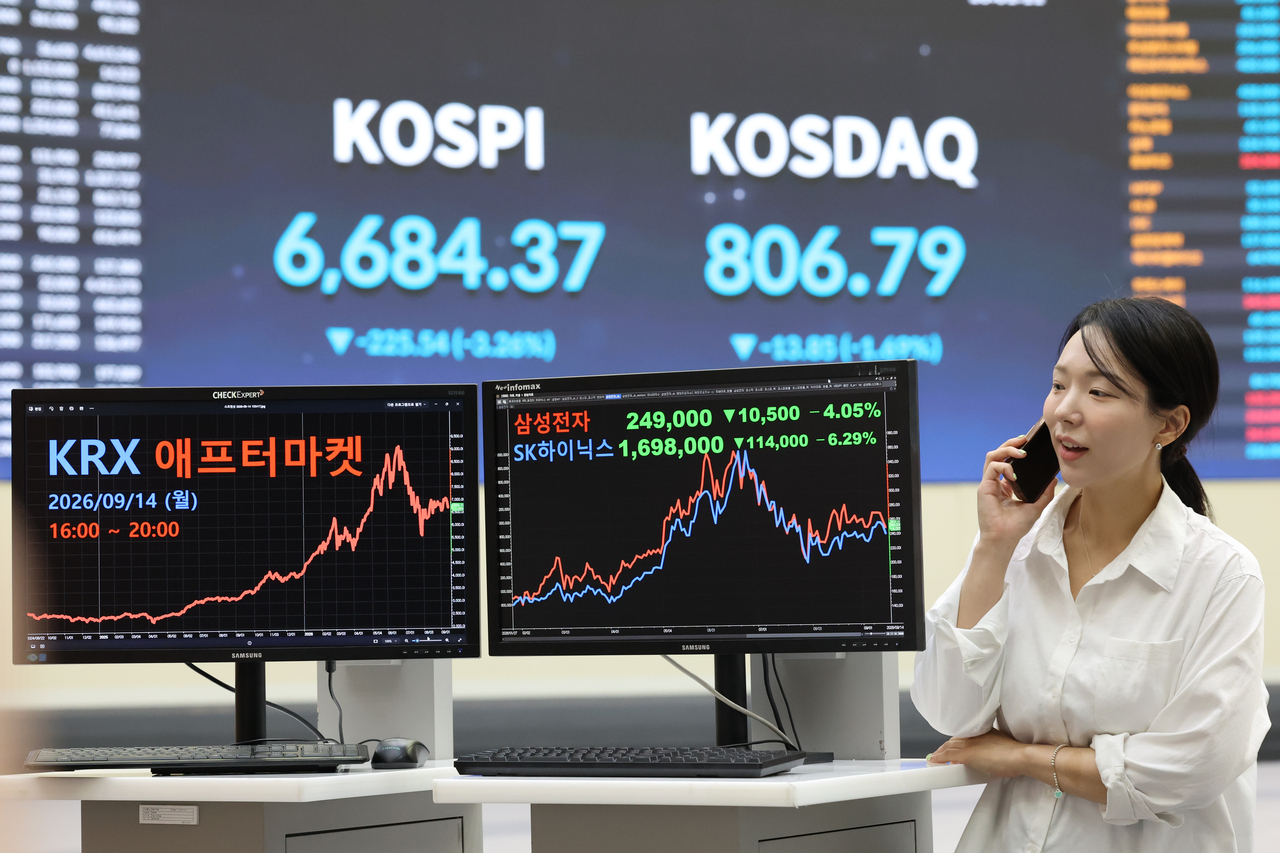
The Korea Exchange's newly launched after-hours market has seen high levels of volatility in its first week, amid relatively thin liquidity and a high concentration of retail…
Retail investors dominate four-hour evening session as thin liquidity amplifies price swings
The Korea Exchange's newly launched after-hours market has seen high levels of volatility in its first week, amid relatively thin liquidity and a high concentration of retail investors.
According to the KRX, an average of 54.85 million shares, worth 1.1 trillion won ($811 million), changed hands each day in during the 4-8 p.m. after-hours market from Sept. 14 to Friday, accounting for 4.6 percent of total market trading value.
During the period, a total of 5,354 volatility interruptions — measures designed to buffer against excessive price swings during trading — were triggered in the after-hours market, accounting for 77.17 percent of the total.
The high number of volatility interruptions in the after-hours market is attributed in part to the heavy concentration of retail investors.
Price swings can be more pronounced in the after-hours market due to a lack of diversity in the type of investor. Participation by institutional investors and other large market players, including pension funds, remains limited, with over 90 percent of trading by retail investors.
Foreign and institutional investors accounted for less than 10 percent combined, at 6.7 percent and 2.6 percent, respectively.
Small- and mid-cap stocks listed on the Kosdaq market are also seeing low levels of liquidity in the after-hours market, which is cited as another factor behind the heightened volatility.
On Sept. 14, Pony Link, a Kosdaq-listed company, closed at 2,400 won during regular trading but suddenly hit the daily upper price limit in the after-hours market, trading at 3,150 won.
مطلع المقال، مقتطف من The Investor. لقراءة المقال كاملًا، افتحه على موقع الناشر.
يعرض MarketNews العنوان والملخص كما نشرتهما الوسيلة الإعلامية. المقال الكامل متوفر على موقع الناشر. (www.theinvestor.co.kr)