The cost of war keeps mounting long after the guns fall silent
详细摘要
Researchers split war deaths into two kinds. Direct deaths come from bullets, bombs and shells. Indirect deaths come from what war leaves behind. read now...
We count the dead while the shooting lasts. The ones who die after the cameras leave – from hunger, cold and collapsed hospitals – rarely make the tally. Wayne Hawkins on the war toll nobody keeps.
ON SUNDAY 1 NOVEMBER, Ukraine's General Staff reported 2,500 Russian soldiers killed or wounded in a single day. It was the highest daily toll of the full-scale war — one casualty roughly every 35 seconds.
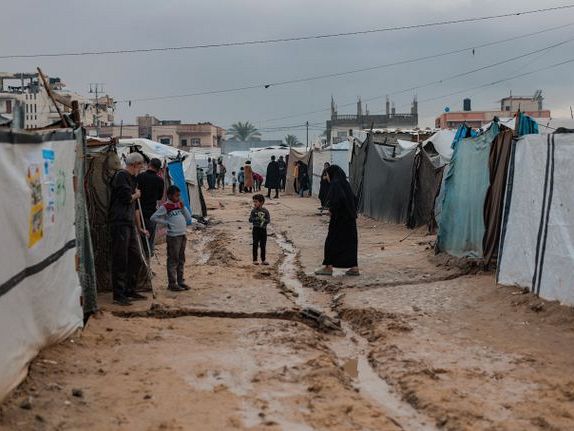
Six days later, across the Black Sea and the Mediterranean, the first winter storm hit Gaza. Within 12 hours, about 70,000 tents sheltering displaced families were flooded. Mothers dragged children out of the water. Buildings already gutted by bombing came down in the rain.
The first story is about the war we can see. The second is about the one that begins when the war supposedly ends. We are good at counting the first. We are terrible at counting the second — and it is usually the bigger number.
As propaganda clouds the Ukraine war, inconvenient truths are being buried and voices opposing the conflict silenced.
Kyiv says Russia has now lost about 1.6 million troops killed or wounded since February 2022. October alone cost 54,400, the worst month of the war by Ukraine's figures.
Independent analysts are lower but not by much: the Center for Strategic and International Studies (CSIS) put Russian casualties at around 1.4 million by mid-2026, and The Economist's latest range runs from 1.4 to 2.1 million.
Ukraine's own losses are smaller but brutal. CSIS estimated 500,000 to 600,000 Ukrainian casualties to the end of 2025, with up to 140,000 dead.
Combined, the toll on both sides has passed two million. CSIS says no major power has suffered losses on Russia's scale in any war since 1945.
文章开头,摘自Independent Australia。如需阅读全文,请前往媒体网站。
MarketNews 仅展示媒体发布的标题和摘要,全文请在出版方网站阅读。 (independentaustralia.net)