India’s film industry hopes a $420 million mythological epic can be a global hit
ملخص مفصل
With a reported budget of 40 billion Indian rupees ($420 million), the two-part Ramayana is the most expensive film ever made in India.
India’s film industry is betting that one of its most popular stories can become a global blockbuster. But a sky-high budget, mixed reviews, and concerns over its use of AI, have raised those stakes even higher.
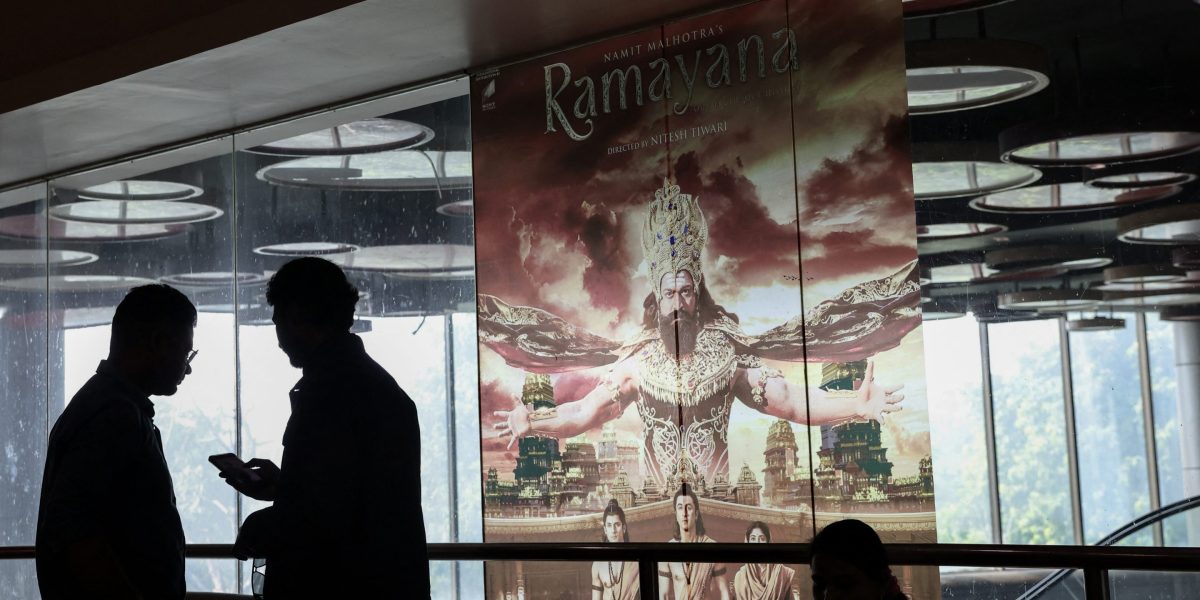
With a reported budget of 40 billion Indian rupees ($420 million), the two-part Ramayana is the most expensive film ever made in India. The film retells the mythological story of Prince Rama’s quest to save his wife Sita from the demon king Ravana, and is inspired by the ancient Sanskrit epic widely regarded as sacred scripture in Hinduism.
The mythological epic held its global premiere in Los Angeles on Oct. 27, drawing praise for its visuals and performances, as well as criticism over its slow pacing and a score that divided critics. The film currently has a 77% critic score and 94% audience score on Rotten Tomatoes.
The film has since generated over $100 million at the global box office, though $67 million of that comes from India. Still, Ramayana was the first Indian film to top the U.K. box office.
The two-part film is among the biggest gambles in Indian cinema—and it is a test of whether a story rooted in Indian religious tradition can draw audiences worldwide. As the filmmakers pursue international audiences with dubbed versions and an effects-heavy spectacle, Ramayana’s reception could offer a measure of how far Indian cinema’s global ambitions can go.
The film’s first installment, titled “Ramayana: Rise of a Legend,” debuted globally on Nov. 5, with a U.S. release on Nov. 6, one day later, according to Box Office Mojo, which tracks the North American box office. Variety reported that the film had grossed $55.7 million globally during its opening weekend.
Indian films used to have global appeal, particularly outside the West. “Raj Kapoor’s film Awara (1951) was a huge success in the Soviet Union, Eastern Europe, China, Turkey, and North Africa.
During the 1980s, Indian films continued to play well outside of the country, with Disco Dancer (1982) and Mard…
Mo…
مطلع المقال، مقتطف من Fortune. لقراءة المقال كاملًا، افتحه على موقع الناشر.
يعرض MarketNews العنوان والملخص كما نشرتهما الوسيلة الإعلامية. المقال الكامل متوفر على موقع الناشر. (fortune.com)