CIS-winning solar-battery hybrid heads to IPC, sent by local objectors from hotly contested REZ
Detailed summary
A NSW solar project has seen big changes since a gruelling public submission process in 2023 that saw a town line up against it. The IPC will now decide if it can go ahead.
A long-delayed solar and battery project in one of the most contentious renewable energy zones in New South Wales has been sent to the final planning arbiter, after attracting 119 objections from the public.
The 255 megawatt (MW) DC Bendemeer solar project is proposed to be paired with a battery energy storage system (BESS) of 150 MW and 300 megawatt-hours, alongside a separately assessed 360 MW wind farm in the NSW New England region.
But the fate of the solar and battery component of Metis Energy’s Bendemeer Renewable Energy Hub is now in the hands of the state Independent Planning Commission (IPC), after attracting more than 50 objections.
In NSW, projects that attract 50 or more objections are automatically referred to the IPC – even if the objections come from hundreds of kilometres away, or from a completely different state. The planning rule means it’s not unusual for renewable energy proposals to end up before the commission.
What is unusual in this case, however, is that a whopping 48 of the 119 objections submitted against Bendemeer came from people living within 5km of the project, as the people from the namesake town of Bendemeer lined up in opposition.
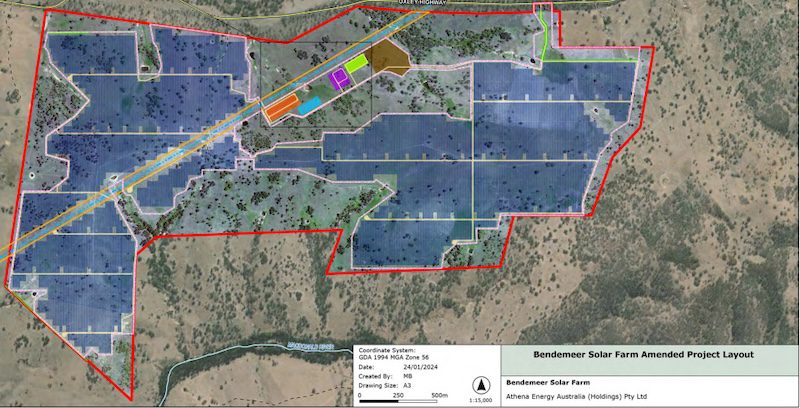
Also unusual is the face that the public submission period was three years ago. The solar and battery project has undergone some major modifications since then, to address “significant concerns,” the NSW Department of Planning, Housing and Infrastructure assessment report to the IPC said.
“The amended application responded to significant concerns… regarding biodiversity impacts,” the report says. “[It] substantially reduced the development footprint and reduced the extent of native vegetation clearing.”
Those concerns from community, council, and a range of government departments meant proponent Athena Energy Australia, which is owned by Singapore-based Metis Energy, had to make changes to 13 different parts of its plan.
It was also sent back twice to redo its Biodiversity Development Assessment report in late…
Opening of the article, excerpted from RenewEconomy. To read the rest, open the article on the publisher's site.
MarketNews shows the headline and summary published by the outlet. The full article is on the publisher's website. (reneweconomy.com.au)